How HVAC Systems Work with Industrial Dehumidifiers for Optimal Air Quality

Understanding HVAC Systems and Their Role in Air Quality
The Basics of HVAC Systems
HVAC systems regulate temperature, airflow, and humidity in commercial and industrial spaces. These setups combine heating, ventilation, and air conditioning to deliver consistent indoor conditions. Operators rely on them to filter contaminants while distributing conditioned air through ductwork. Effective HVAC operation prevents mold growth and supports worker productivity by keeping environments stable. Facilities managers integrate controls that adjust based on load demands, ensuring energy use stays efficient. Proper design accounts for building size, occupancy, and local climate factors that influence overall performance.
In larger facilities, HVAC designs often incorporate zoning strategies that allow different areas to maintain independent setpoints, optimizing comfort without wasting energy on unoccupied zones. Seasonal variations require systems to switch seamlessly between heating and cooling modes, while incorporating economizers that leverage outside air when conditions permit. Regular commissioning ensures that initial performance metrics remain aligned with operational goals over time, reducing the likelihood of drift that could compromise air quality or inflate utility costs.
Components of HVAC Relevant to Dehumidification
Key HVAC elements include the evaporator coil, condenser, blower, and duct system. The blower moves large volumes of air across cooling coils where moisture condenses and drains away. Filters capture particulates before air reaches occupied zones. Dampers regulate airflow volume to maintain pressure balance. These parts work in sequence to remove excess water vapor during cooling cycles. Integration points allow external devices to enhance moisture removal when standard coils fall short in high-humidity settings. Regular inspection of coils and drains prevents blockages that reduce dehumidification capacity.
Additional components such as reheat coils and energy-recovery ventilators further refine moisture control by tempering air after dehumidification without adding unnecessary sensible heat. Variable-air-volume boxes enable precise distribution adjustments based on real-time occupancy sensors, while condensate pumps ensure reliable drainage in below-grade mechanical rooms. Understanding the interplay between these elements helps technicians diagnose why a system might deliver adequate cooling yet fail to achieve target humidity levels.
How HVAC Systems Maintain Optimal Air Moisture Levels
HVAC units lower air moisture by cooling incoming air below its dew point so water vapor condenses on coils. Thermostats and humidistats coordinate to hold relative humidity between 40 and 60 percent. Variable-speed blowers adjust airflow rates to match real-time conditions and avoid over-cooling. When moisture loads exceed coil capacity, systems benefit from supplemental equipment that targets specific humidity targets. This coordinated approach keeps spaces comfortable while protecting equipment and inventory from corrosion or spoilage.
Advanced controls now integrate enthalpy sensors that evaluate total energy content of air rather than temperature alone, allowing more accurate moisture management across fluctuating ambient conditions. In practice, operators often establish seasonal reset schedules that raise humidity setpoints slightly during winter to reduce heating loads while still preventing condensation on windows or equipment surfaces. Documentation of these strategies supports continuous commissioning and helps facilities demonstrate compliance with indoor environmental quality standards.
The Functionality of Industrial Dehumidifiers
Types of Industrial Dehumidifiers: Refrigerant vs. Desiccant
Refrigerant-based industrial dehumidifiers cool air over evaporator coils to extract moisture through condensation. They suit moderate temperature environments where dew points remain above freezing. Desiccant models use moisture-absorbing materials such as silica gel to pull water vapor from air streams without relying on temperature drops. These units perform well in cold or low-humidity applications common in manufacturing. Both types connect to existing HVAC infrastructure to boost overall moisture control. Selection depends on required dew points, airflow volume, and energy costs at each facility.
Hybrid configurations that combine both technologies are gaining traction in facilities with wide seasonal swings, allowing refrigerant sections to handle peak summer loads while desiccant wheels manage wintertime drying. Refrigerant units typically achieve dew points around 50–55 °F, whereas desiccant systems routinely reach 20 °F or lower, making them indispensable for processes sensitive to even trace moisture. Energy modeling during selection helps quantify operating costs and payback periods associated with each approach.
How Dehumidifiers Work Together with HVAC Systems
An industrial dehumidifier augments HVAC performance by handling latent loads that exceed coil capacity. Air passes through the dehumidifier first, where moisture drops to target levels, then enters the HVAC for temperature adjustment. This sequence reduces compressor runtime and prevents coil icing. Duct connections allow treated air to distribute evenly across large spaces. Operators monitor combined output to maintain consistent conditions without excessive energy draw. The partnership improves air quality by lowering mold risk and stabilizing humidity throughout production areas.
Proper sequencing also involves bypass dampers that permit a portion of return air to skip the dehumidifier during low-load periods, preserving overall system efficiency. In many retrofits, dedicated outdoor-air systems precondition ventilation air before it mixes with recirculated streams, dramatically lowering the latent burden placed on central HVAC equipment. The result is longer equipment life and fewer comfort complaints from occupants.
Key Metrics: CFM and Dew Points in Dehumidification
CFM ratings indicate how much air an industrial dehumidifier processes per minute, directly affecting coverage area. Higher CFM values handle larger facilities or high moisture loads effectively. Dew point measurements reveal the temperature at which air becomes saturated; lower targets mean drier conditions. Technicians track these values to verify system performance and adjust settings. Accurate monitoring ensures the blower delivers sufficient airflow while the unit maintains specified dew points. Facilities achieve precise climate control when both metrics align with process requirements.
Calculating required CFM involves dividing the total moisture removal rate (in pints per hour or grains per pound) by the unit’s rated moisture-removal efficiency at the design conditions. Continuous data logging of dew-point trends allows predictive adjustments before humidity drifts outside validated ranges. When both metrics are optimized together, operators can document consistent performance that supports both regulatory audits and internal quality programs.
Applications of Industrial Dehumidifiers Across Industries

Dehumidifiers in the Pharmaceutical Industry
The pharmaceutical industry demands strict humidity control to preserve drug stability and prevent microbial contamination. An industrial dehumidifier maintains low dew points during tablet coating, capsule filling, and powder handling. Consistent air moisture levels protect active ingredients from degradation and support regulatory compliance. Integrated HVAC systems distribute the conditioned air through cleanrooms where even minor fluctuations affect product quality. Operators log dew point data to document process conditions and validate batch integrity across production runs.
Many facilities now employ redundant dehumidification trains to guarantee uptime during maintenance windows, ensuring 24/7 environmental control required by current good manufacturing practices. Real-time monitoring combined with electronic batch records enables immediate investigation of any excursion that could impact product release decisions.
Impact on Food Packaging and Preservation
Food packaging lines require controlled humidity to stop condensation that leads to spoilage or label failure. Industrial dehumidifiers remove excess air moisture before products enter sealing stations. This prevents ice crystal formation in frozen goods and extends shelf life for dry snacks and powders. The equipment pairs with HVAC to regulate temperature while targeting specific dew points that inhibit mold. Processors gain reliable output and reduced waste when dehumidification matches production speeds and ambient conditions.
In high-speed lines, dehumidifiers often incorporate HEPA filtration stages to meet both moisture and particulate standards simultaneously. By maintaining dew points below the surface temperature of incoming packaging materials, processors eliminate condensation-related defects that previously caused costly rework or recalls.
Electronics Manufacturing and Moisture Control
Electronics assembly areas suffer from corrosion and static when humidity rises above safe thresholds. An industrial dehumidifier keeps dew points low enough to protect circuit boards during soldering and testing. HVAC systems then circulate the dry air to maintain uniform conditions across clean benches. Manufacturers reduce defect rates and extend equipment life by combining both technologies. Monitoring CFM ensures adequate air changes without introducing particles that compromise sensitive components.
Low-humidity environments also minimize electrostatic discharge events that can destroy microelectronic components during handling. Many plants integrate ionization systems alongside dehumidification to neutralize charges while still preserving the dry conditions essential for yield optimization.
Troubleshooting Common Issues with Industrial Dehumidifiers
Identifying Malfunctions in Dehumidification Processes
Common signs of trouble include rising humidity readings, unusual noises from the blower, or water leaks around drain lines. Technicians check refrigerant levels in cooling models and inspect desiccant wheels for saturation. Blocked filters or dirty coils reduce CFM and prevent the unit from reaching target dew points. Electrical faults in controls can cause short cycling that wastes energy. Systematic testing of sensors and airflow helps isolate problems before they affect entire HVAC performance.
Thermal imaging of coils and electrical panels often reveals hot spots or frost patterns that indicate underlying issues long before they trigger alarms. Trend analysis of logged data can pinpoint gradual performance degradation, enabling proactive intervention rather than emergency repairs.
Maintenance Tips for Optimal Performance
Scheduled filter changes and coil cleaning keep airflow high and prevent efficiency loss. Operators inspect drain pans weekly to avoid overflow and bacterial growth. Desiccant units need periodic reactivation cycles to restore moisture capacity. Calibration of humidistats and dew point sensors maintains accurate readings. Lubrication of blower motors and belt checks reduce downtime. These steps extend equipment life and sustain the climate control benefits provided by integrated HVAC and dehumidifier setups.
Many facilities now adopt predictive-maintenance platforms that use vibration and current-draw data to forecast bearing or motor failures weeks in advance. Documenting all service activities creates a valuable historical record that supports warranty claims and capital-planning decisions.
When to Seek Professional Help
Persistent high humidity despite maintenance signals the need for expert diagnosis. Complex refrigerant leaks or desiccant replacement require certified technicians. Facilities should call specialists when electrical issues affect both the dehumidifier and HVAC controls. Professional service restores proper CFM and dew point performance quickly. Early intervention avoids production interruptions and protects sensitive processes in pharmaceutical or electronics environments.
Service contracts that include annual performance testing and emergency response guarantees provide peace of mind for critical operations where even brief humidity excursions can result in substantial financial loss.
Future Trends in HVAC and Dehumidification Technology
Innovations in Industrial-Grade Dehumidifiers
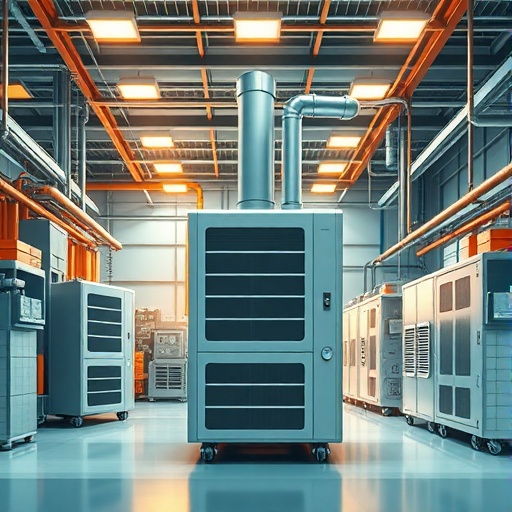
New industrial dehumidifier designs incorporate variable-speed compressors and advanced desiccant materials that lower energy use. Compact units deliver higher CFM in smaller footprints, fitting retrofits into existing HVAC layouts. Enhanced sensors provide real-time dew point feedback for automatic adjustments. These advances improve dehumidification precision across demanding applications while reducing operating costs for facility managers.
Emerging solid-desiccant and liquid-desiccant systems promise even greater efficiency by decoupling latent and sensible loads more effectively than traditional approaches. Modular designs allow incremental capacity additions without major mechanical-room renovations.
Sustainability and Energy Efficiency in Climate Control
Modern systems recover heat from dehumidification processes to preheat incoming air, cutting overall HVAC demand. Low-global-warming-potential refrigerants and high-efficiency blowers support corporate sustainability goals. Facilities track energy metrics alongside humidity data to optimize performance. The combination of efficient industrial dehumidifiers and smart HVAC controls lowers carbon footprints without sacrificing air quality standards.
Life-cycle assessments increasingly guide equipment choices, favoring designs that minimize embodied carbon as well as operational energy. Incentives and utility rebates for verified efficiency improvements further accelerate adoption of next-generation climate-control solutions.
The Role of IoT in Monitoring Air Quality
IoT sensors placed throughout facilities stream CFM, dew point, and humidity data to centralized dashboards. Alerts notify staff of deviations before conditions impact production. Integration with HVAC and dehumidifier controls enables predictive maintenance that prevents failures. This connected approach delivers precise climate control, supports compliance reporting, and improves responsiveness in pharmaceutical, food packaging, and electronics settings.
Cloud-based analytics platforms correlate environmental data with production metrics, revealing previously hidden relationships between humidity stability and product yield. Edge computing ensures that critical control loops remain functional even during network outages, maintaining uninterrupted environmental integrity.
See Also
- Exploring the Benefits of Desiccant Dehumidifiers in Industrial Settings
- Troubleshooting Common Issues with Industrial Dehumidifiers
- Choosing the Right Industrial Dehumidifier for Your Food Packaging Needs
- Understanding Dew Points and Their Impact on Dehumidification Processes
- Maximize Efficiency with Industrial Dehumidifiers for Climate Control